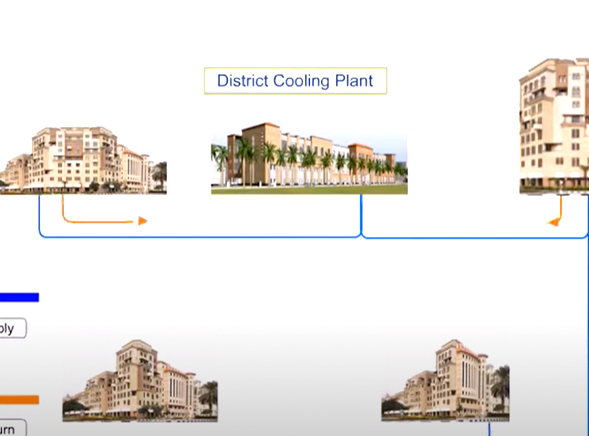
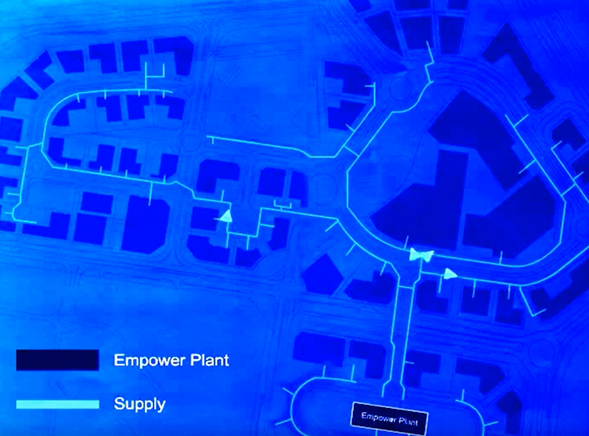
District cooling helps the environment by increasing energy efficiency and reducing environmental emissions including air pollution, the greenhouse gas (GHG) carbon dioxide (CO2) and ozone-destroying refrigerants. Most Middle Eastern governments are parties to the United Nations Framework Convention on Climate Change. With most countries in the region having extremely high GHG emissions per capita, this issue will become increasingly important for government policy.
District cooling can reduce annual CO2 emissions by about 1 ton for every ton of district cooling refrigeration demand served. The envisioned district cooling potential in the Middle East (cumulative total of 2.9 million tons of refrigeration demand by 2015) could reduce carbon dioxide emissions by about 2.8 million tons annually.